Visualized: The Price of Carbon Around the World
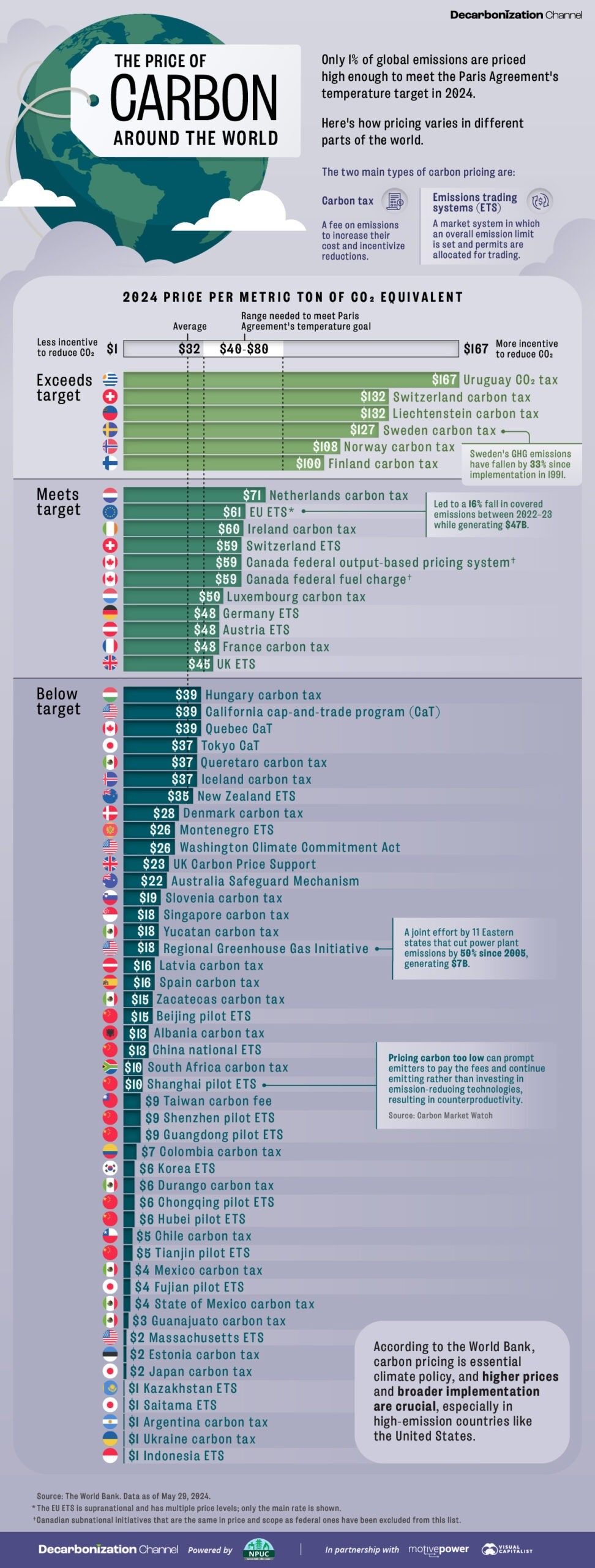
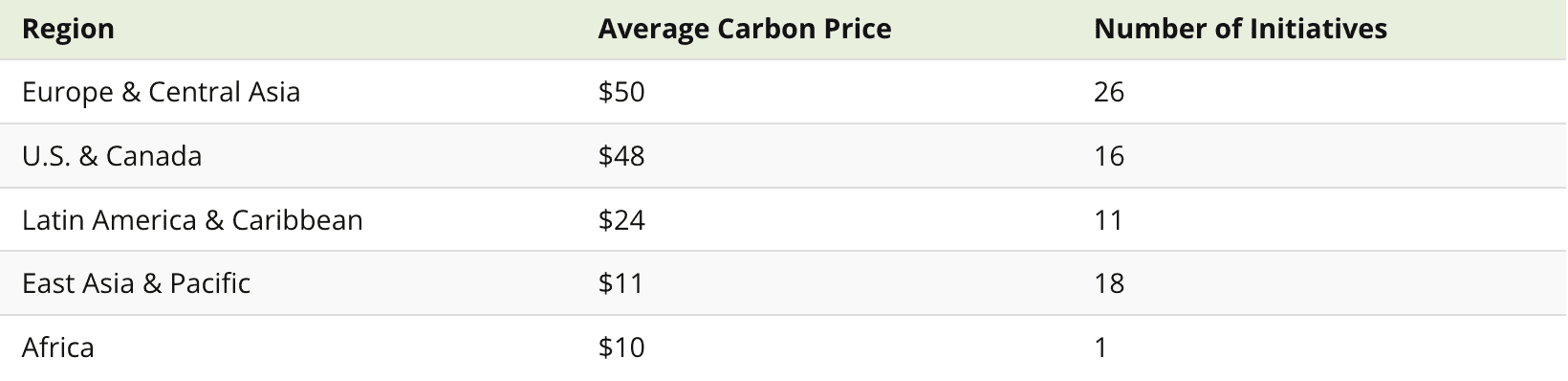
The European Union’s ETS system was introduced in 2005. The initiative led to a 16% decrease in covered emissions between 2022 and 2023 and generated $47 billion. Several EU member countries have also implemented their own carbon pricing mechanisms to address sectors outside the EU ETS’s scope or to generate domestic revenue.
While there are notable efforts made in Europe, Central Asia, and North America, the highest carbon tax in the world belongs to Uruguay at $167/tCO2. According to the World Bank, Uruguay’s GDP per capita is $20,795, which is significantly lower than other countries with Paris Agreement-aligned carbon pricing.
Despite these differing initiatives, the global average carbon price still lags behind the levels needed to achieve the Paris Agreement targets, emphasizing the critical need for more robust and widespread adoption of carbon pricing to drive meaningful climate action.
Learn more about how electric utilities and the power sector can lead on the path toward decarbonization here.


