Visualized: Carbon Pricing Initiatives in North America
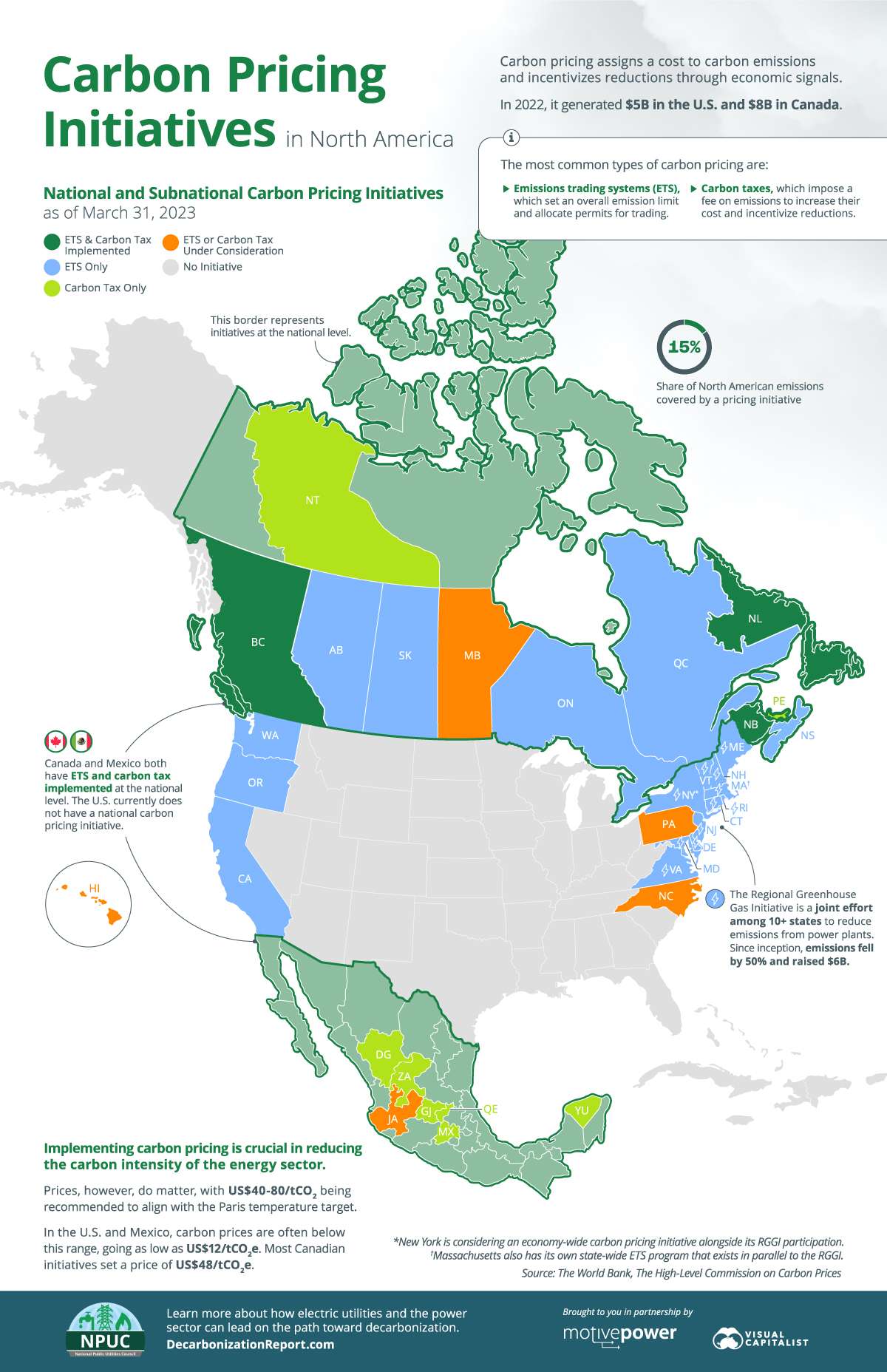
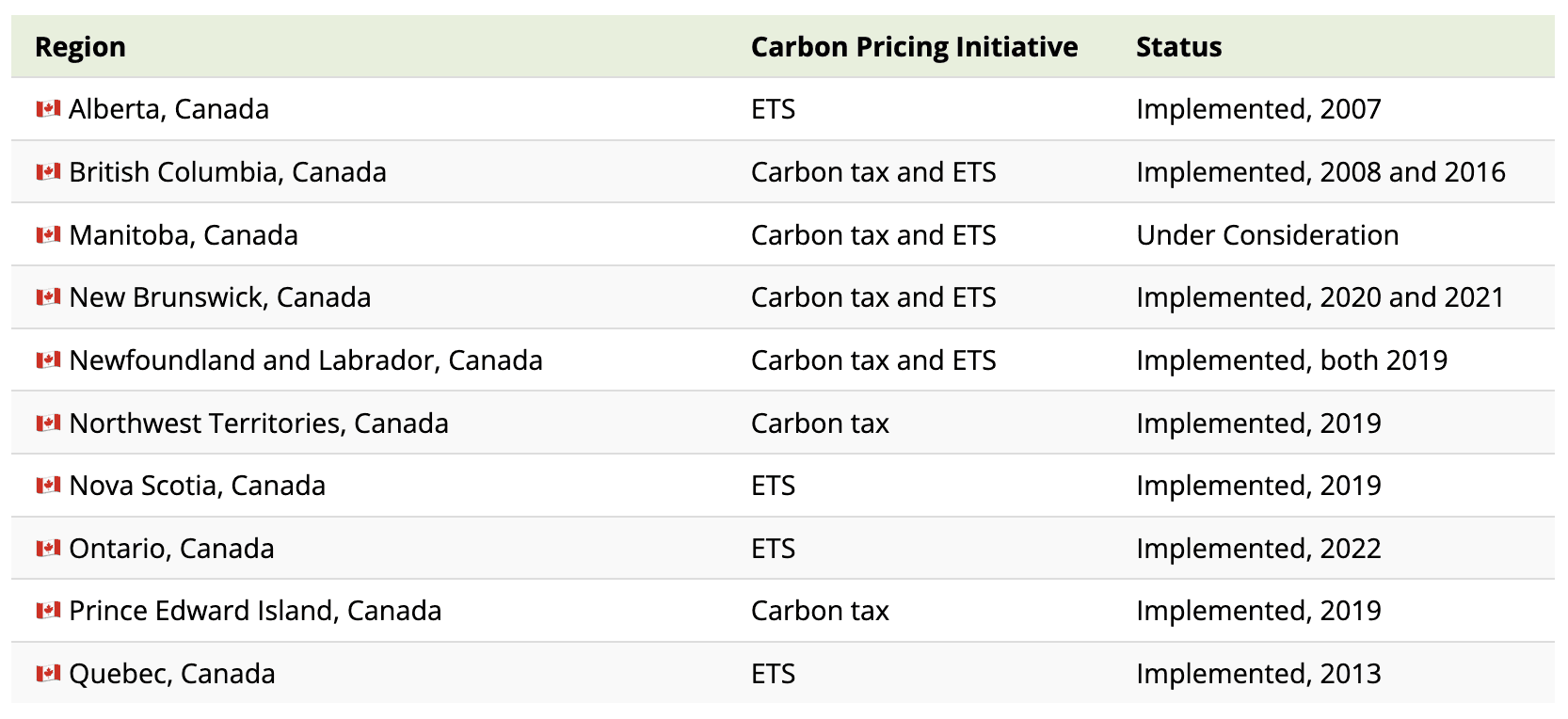
The RGGI was the first mandatory ETS initiative in the U.S. and applies to power plants in Connecticut, Delaware, Maine, Maryland, Massachusetts, New Hampshire, New Jersey, New York, Rhode Island, Vermont, and Virginia.
Since its inception, emissions in the RGGI region fell by more than 50%—twice as fast as the nation as a whole—and raised nearly $6 billion to invest in local communities.
Are All Carbon Pricing Initiatives Created Equal?
In the landscape of carbon pricing initiatives, one critical factor stands out—the price of carbon itself.
According to The High-Level Commission on Carbon Prices, achieving alignment between carbon pricing strategies and the Paris Agreement temperature target requires a price of US$40–80/tCO2 by 2020 and US$50–100/tCO2 by 2030.
Unfortunately, many North American initiatives fall short of these prices, especially in the U.S. and Mexico, where carbon prices reach as low as US$12/tCO2e. Conversely, most Canadian initiatives set a price of US$48/tCO2e.
It’s also important to note that the broader impact of these initiatives depends on a multitude of other factors, including the industries they cover, their flexibility in accommodating changing economic conditions, and the manner in which generated revenue is invested back into sustainable practices.
Within the balance of these various elements lies the potential to steer all industries—including the power sector—toward the necessary emissions reductions.


