Ranked: The Most Consistent U.S. Power Sources
Key Takeaways
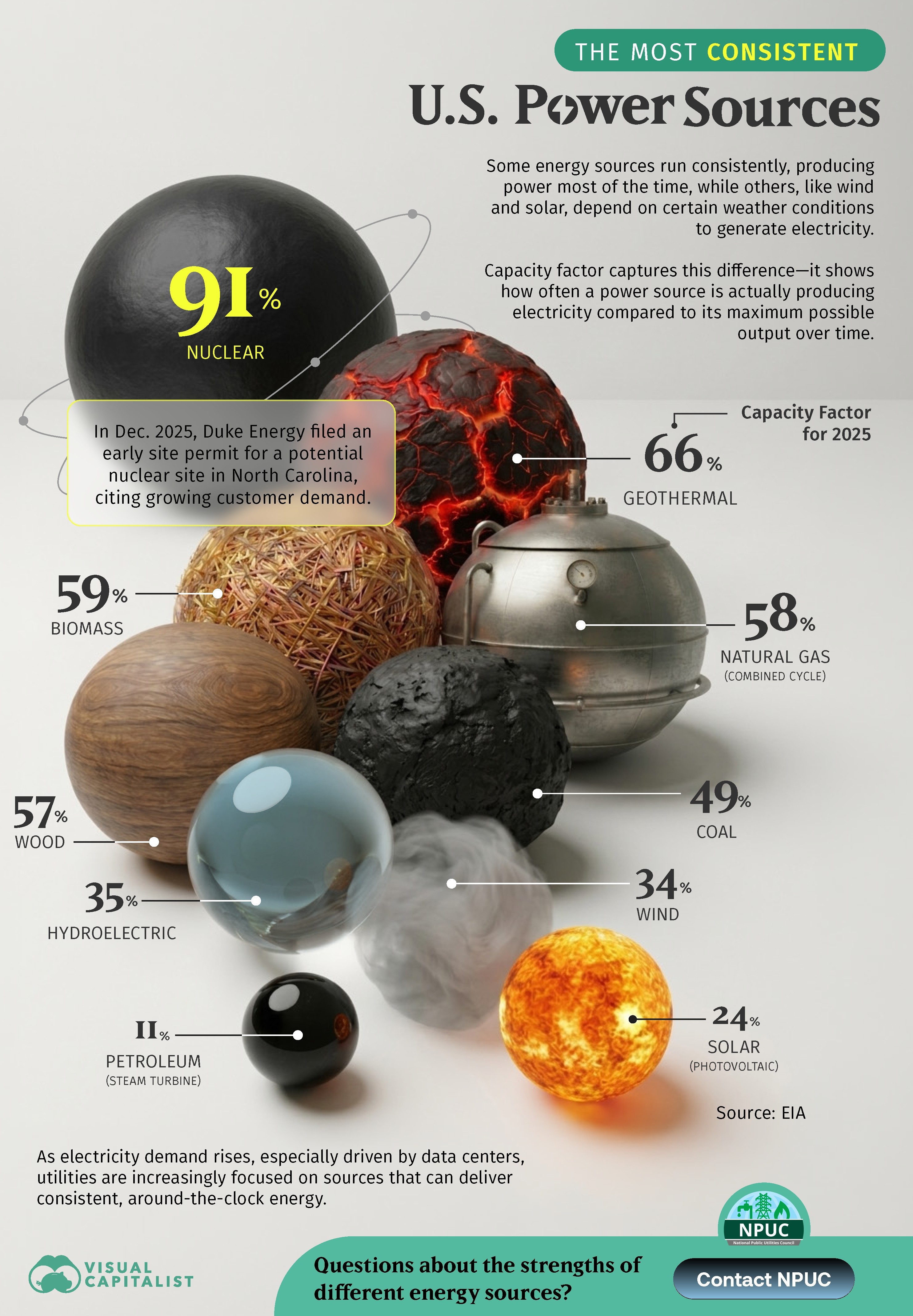
Nuclear leads major U.S. power sources with a 91% capacity factor in 2025.
Geothermal, biomass, and combined-cycle natural gas also post strong reliability scores.
IOUs such as Duke Energy and Georgia Power are planning around firm generation as data center demand rises.
Ranked: The Most Consistent U.S. Power Sources
Reliable electricity is gaining value as utilities plan for AI-led growth and a more digital economy.
Capacity factor helps compare the fitness of power sources on this topic because it shows which technologies deliver the steadiest output over time.
This graphic, in partnership with the National Public Utilities Council, shows the most consistent U.S. power sources using data from the EIA.
Why Capacity Factor Matters
Capacity factor compares actual generation with the maximum possible output over a full year. As a result, it offers a simple way to see which power sources can run hardest when demand rises.
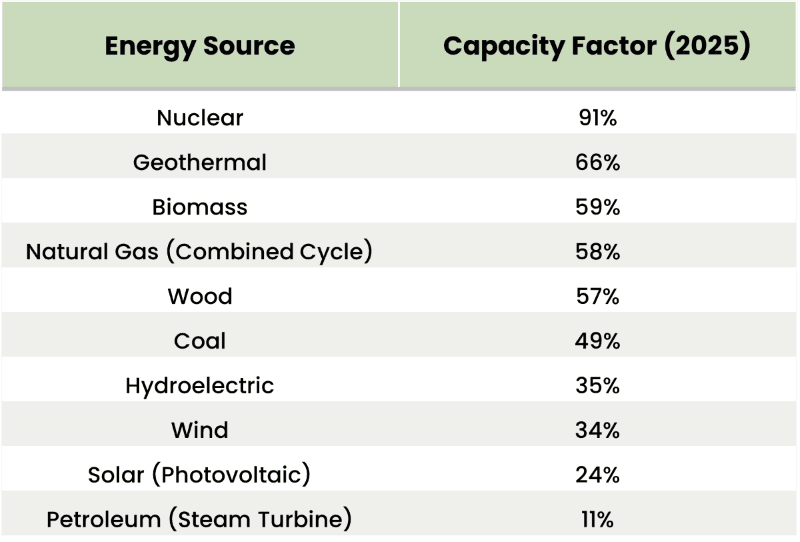
Here is a table that shows U.S. power sources ranked by 2025 capacity factor.
Nuclear Leads the Ranking
Nuclear posts a 91% capacity factor, far ahead of geothermal at 66% and biomass at 59%. That lead helps explain why firm, emission-free generation remains central as U.S. data center power demand climbs.
The combined cycle variant of natural gas, with its capacity factor of 58%, is the current go-to source in the U.S. for meeting the jump in electricity demand from AI and data centers because utilities can add firm gas-fired generation faster than many other always-available options.
Meanwhile, a low capacity factor is one of the biggest downsides of wind (34%) and solar (24%), as it limits how often they can produce at high levels compared with more consistent sources. Utilities must often pair them with storage, backup generation, or grid upgrades to maintain reliability as demand grows.
How IOUs Are Responding
Several U.S. investor-owned utilities are prioritizing expanding energy capacity for the source with the highest capacity factor.
For example, Duke Energy filed an early site permit application on December 30, 2025, for a potential nuclear site at Belews Creek in North Carolina.
Meanwhile, Georgia Power’s approved 2025 IRP is designed to meet the needs of a growing Georgia, showing how major investor-owned utilities are planning for higher loads with firm generation, grid upgrades, and long-range strategy.
Together, those moves show why capacity factor matters beyond a ranking. It helps utilities identify which power sources can support growth, strengthen resilience, and keep decarbonization plans moving.


