Visualized: Emission Reduction Targets by Country in 2024
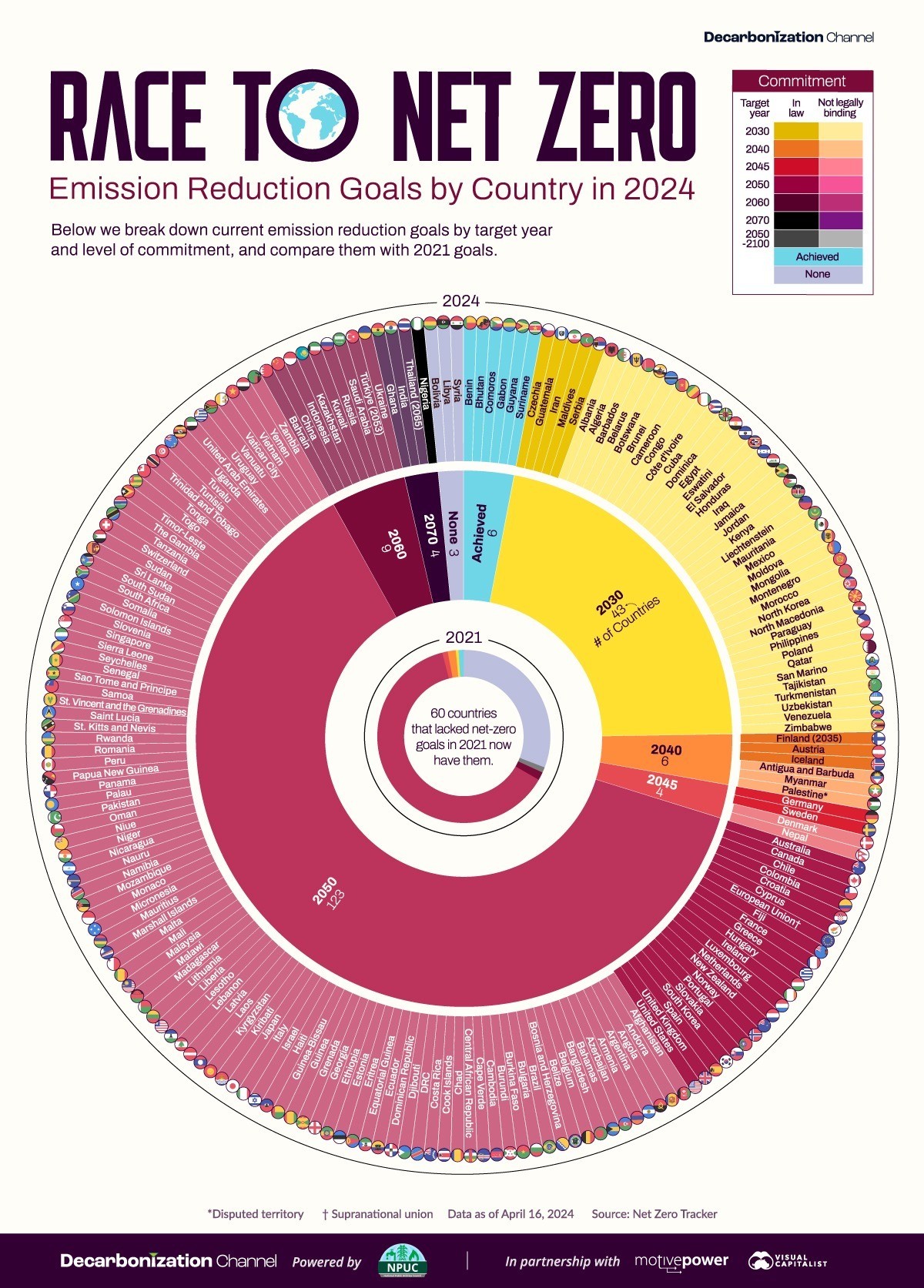
The United States has an interim goal of a 50-52% reduction in emissions below 2005 levels by 2030, with a net zero target set for 2050.
Their primary economic rival, China, is focused on peaking its CO₂ emissions by 2030 instead of reducing them. Their net zero target, on the other hand, is currently set for 2060.
The European Union requires all 27 member states to reduce emissions 55% by 2030, with a net-zero goal for 2050.
Australia, which is among the top emitters per capita because of its fossil fuel usage, aims to reduce emissions by 43% from 2005 levels by 2030, while their net zero target is set for 2050.
Ambitious Climate Leaders and Laggards
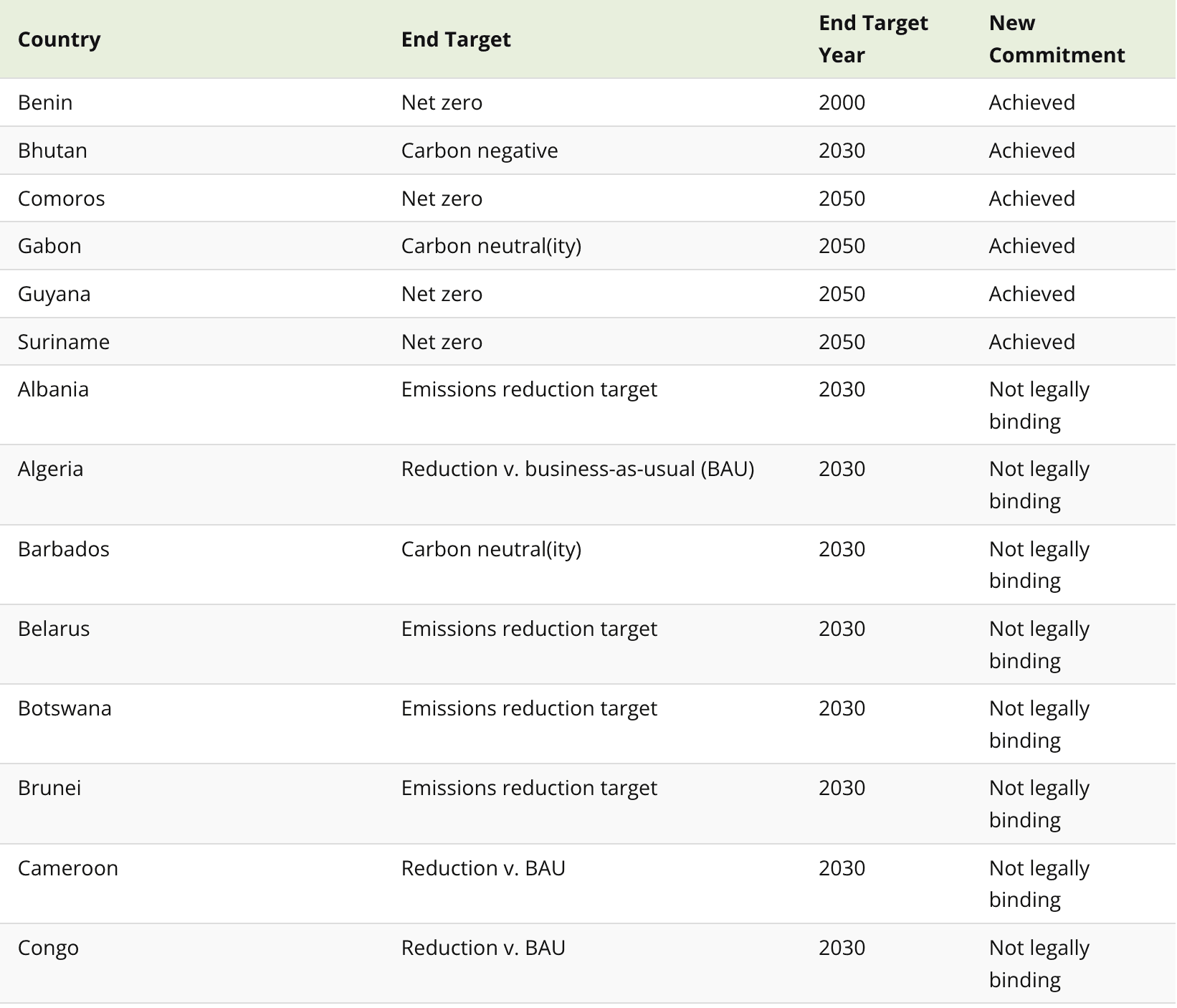
While Comoros, Bhutan, Gabon, Suriname, and Guyana claim to have already achieved net zero, several major countries lack commitment.
Russia, one of the world’s largest polluters, has a net zero target set for 2060. Several other top-emitting countries, such as India and Indonesia, have net zero targets that also do not meet the Paris Climate Accord timeline of net zero by 2050. Their net-zero commitments are targeted at 2070 and 2060, respectively.
Iran is the only one of the top 10 largest emitting nations without a net zero target. However, it has an interim target of reducing emissions 3.45% by 2030.
Finland leads all countries with a legally binding net zero target set for the ambitious year 2035. Germany, a more populous nation, is also topping the Paris Climate Accord timeline, enshrining its net zero target into law for 2045.
The global race to net zero is ongoing, with countries at various stages of commitment. While significant progress has been made, many of the world’s largest emitters have yet to commit to net zero emission goals aligned with the Paris Climate Accord.
Learn more about how electric utilities and the power sector can lead on the path toward decarbonization here.


