Ranked: The Cheapest Sources of Electricity in the U.S.
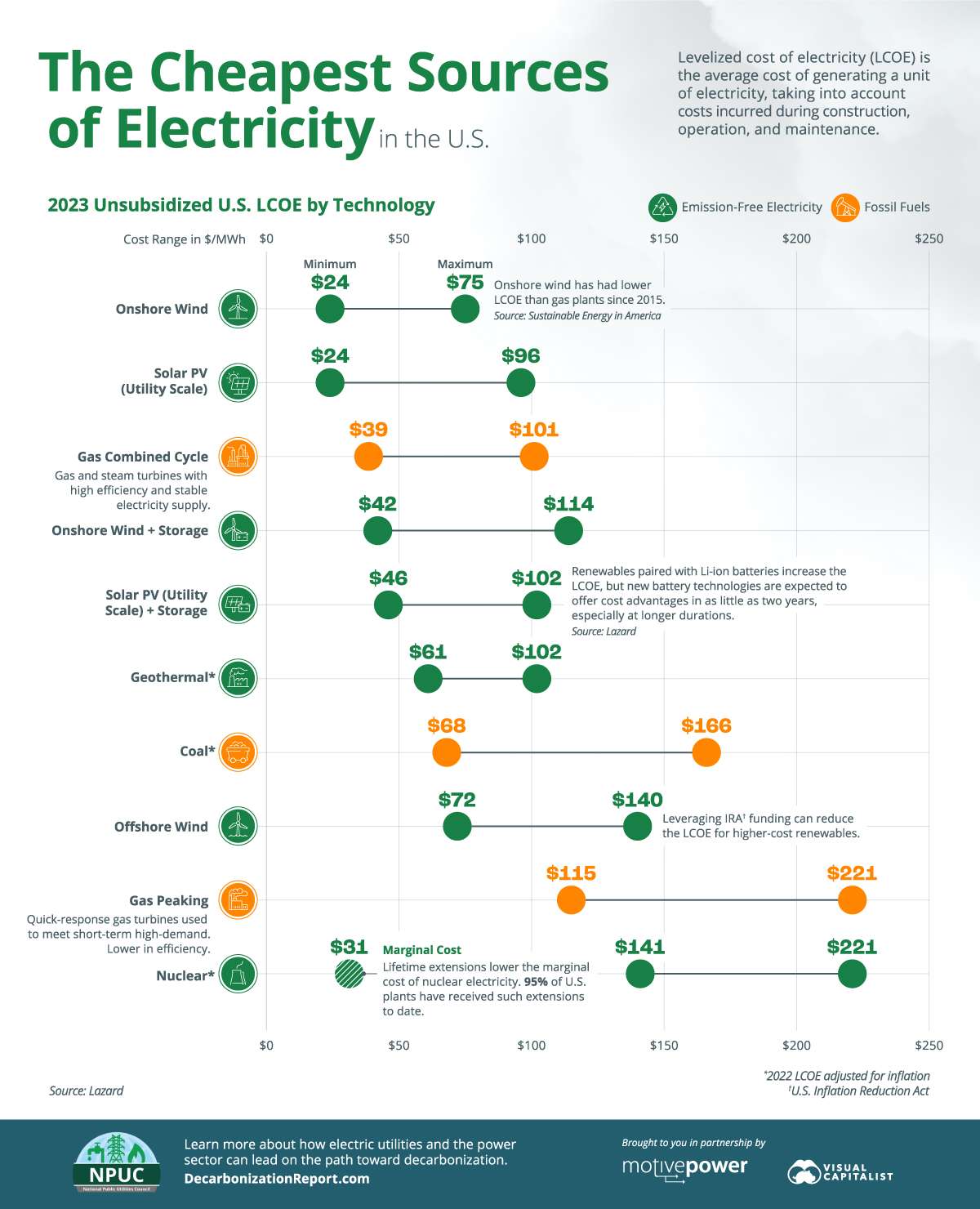
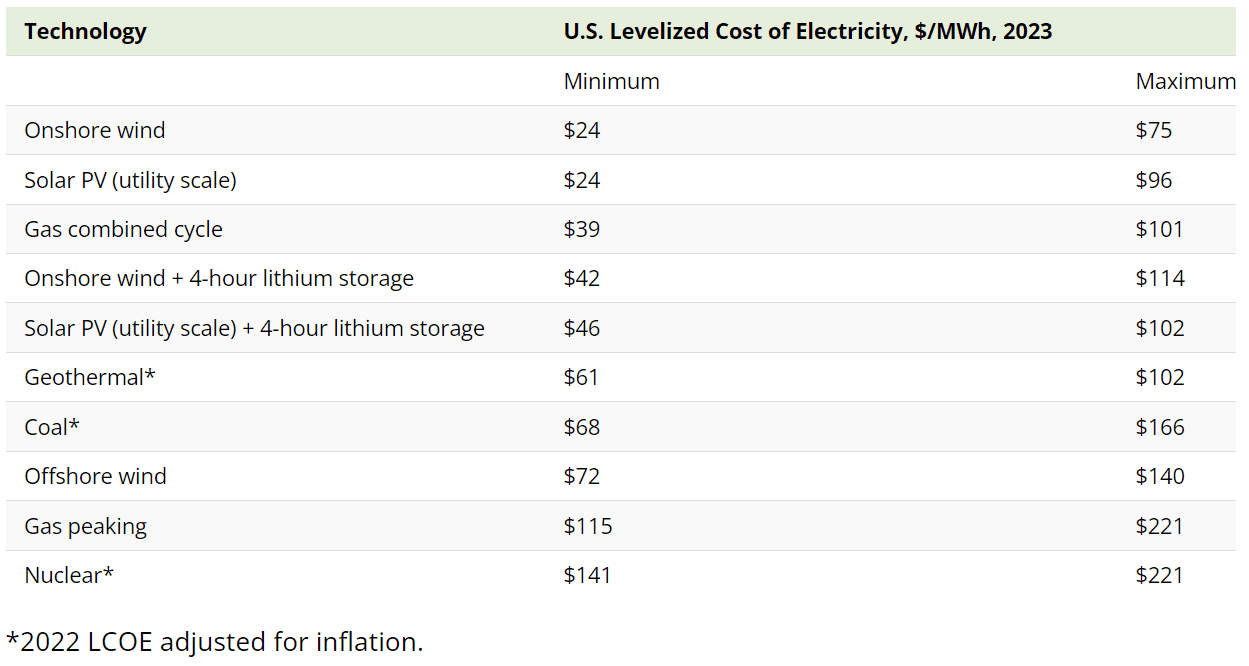
Overall, the data shows us that most emission-free sources are cheaper than fossil fuels. There are, however, some other things to consider:
Coupling lithium-ion batteries with intermittent energy technologies, such as wind and solar, raises costs by $6-$39/MWh. As new storage technologies, such as electrochemical batteries, mature, however, Lazard expects them to offer cost advantages to lithium-ion ones in as little as two years, especially at longer durations (6+ hours).
While the LCOE of nuclear seems to be high, license renewals can significantly lower the marginal cost of electricity in these power plants. 88 of the 92 U.S. nuclear reactors have received such renewals in the past.
The efficiency of generation technologies plays a big role in LCOE. This is especially evident in the high cost of gas peaking power plants.
LCOE Trends for Clean Electricity
There are various factors that can influence the LCOE of clean electricity technologies. These include:
Financing costs, policy incentives, and government subsidies
Geographical location, which can influence the availability of renewable resources like sunlight and wind speed
The availability and cost of key clean energy metals and materials, such as copper, silicon, nickel, zinc and chromium
The maturity of the technologies, the scale of deployment and the growth in demand
The overall supply chain, including where most of these technologies are primarily manufactured (China), shipping costs, and disruptions due to global events, such as wars
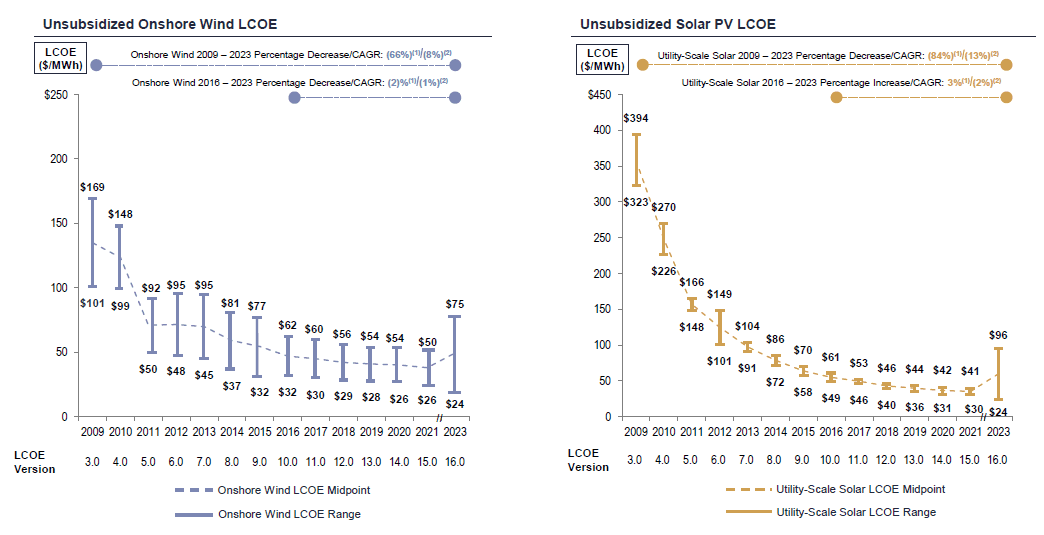
As seen below, the combination of these factors has dramatically pulled down the LCOE of onshore wind and solar PV since 2009, with the exception of 2022-2023.