Ranked: Energy Transition Scores by Country in 2024
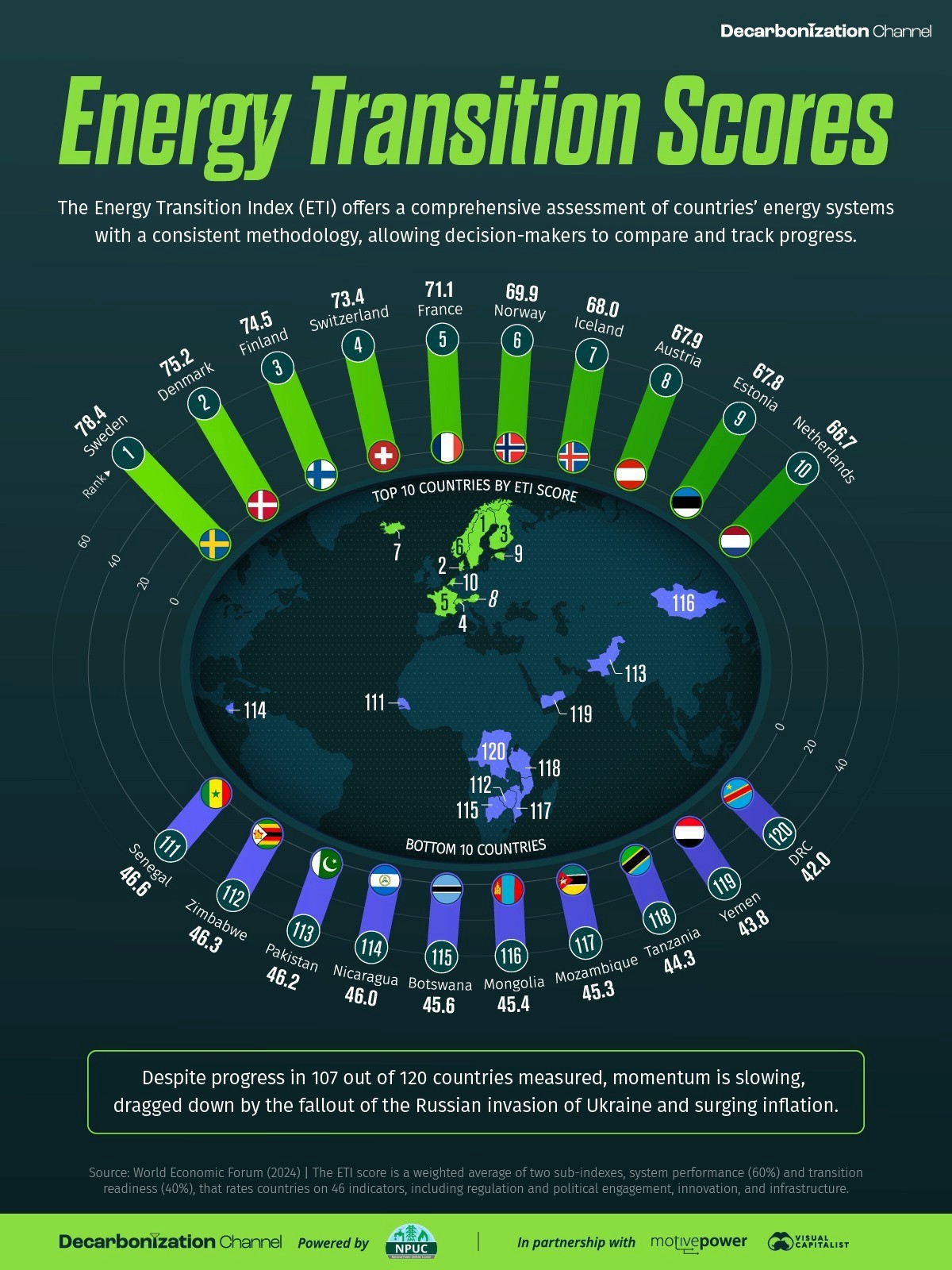
However, even though sub-Saharan Africa has the lowest regional average score, individual countries are making significant progress. For example, Zimbabwe’s score has increased 33% since 2015, thanks to the increase in their hydropower capacity.
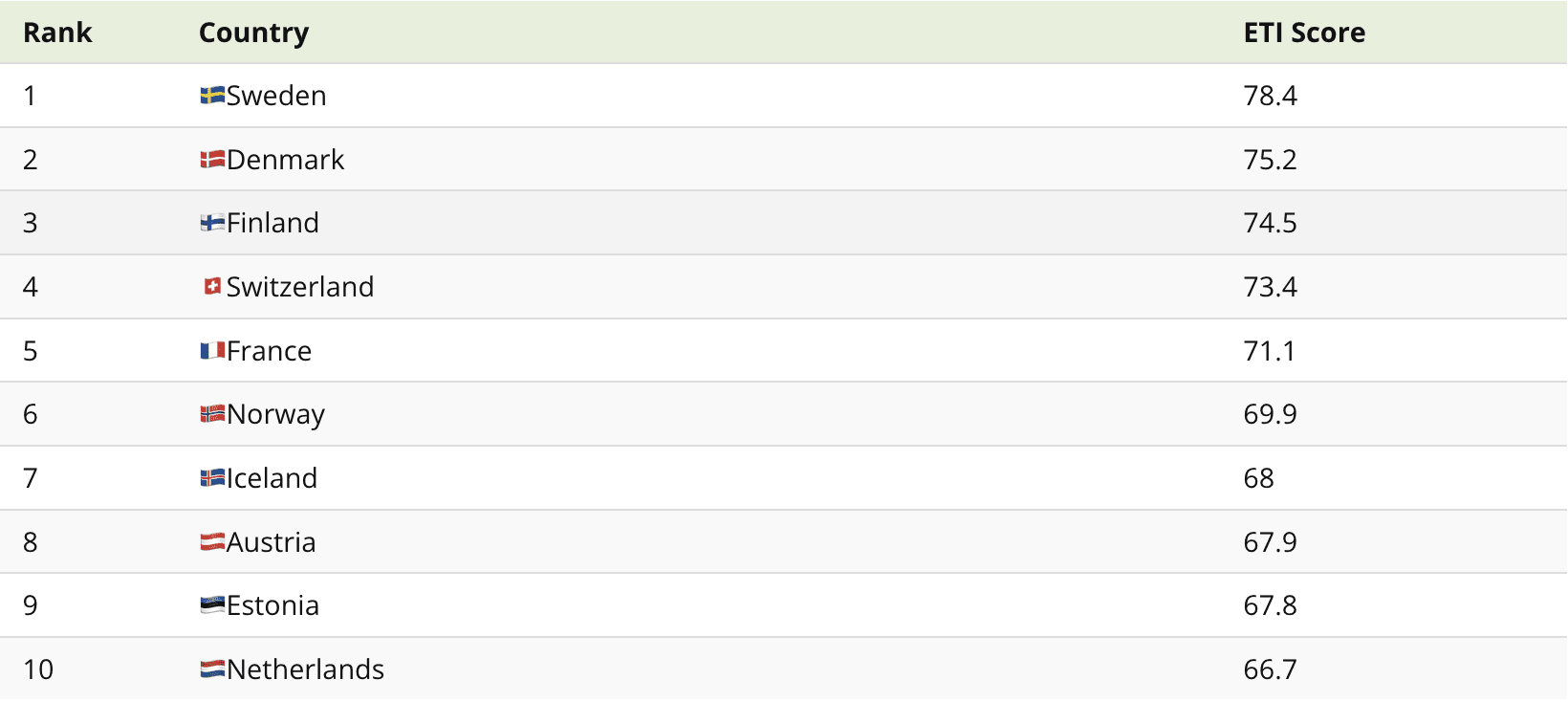
On the other hand, the ETIs of some advanced economies are declining, such as Norway, whose score decreased by 0.4 points over the past nine years. This decrease is due to rising electricity prices and a decline in renewable capacity buildout.
The Largest Economies and the Future
The world’s largest economy, the United States, has remained at 64.0 over the past year. China, however, has moved ahead to 64.1 from 2023 to 2024, thanks to significant growth in areas like batteries, EVs, and high-voltage transmission. The country also allocates the largest share of its GDP to investments in renewables, at 9%.
All countries must dramatically increase their ETI scores to prevent global warming above 1.5 degrees Celsius. While many countries, such as Norway, are stagnating in their progress, others, such as Zimbabwe, exceed expectations for their wealth, signaling the possibility for all countries to meet their climate targets.
Learn more about how electric utilities and the power sector can lead on the path toward decarbonization here.


