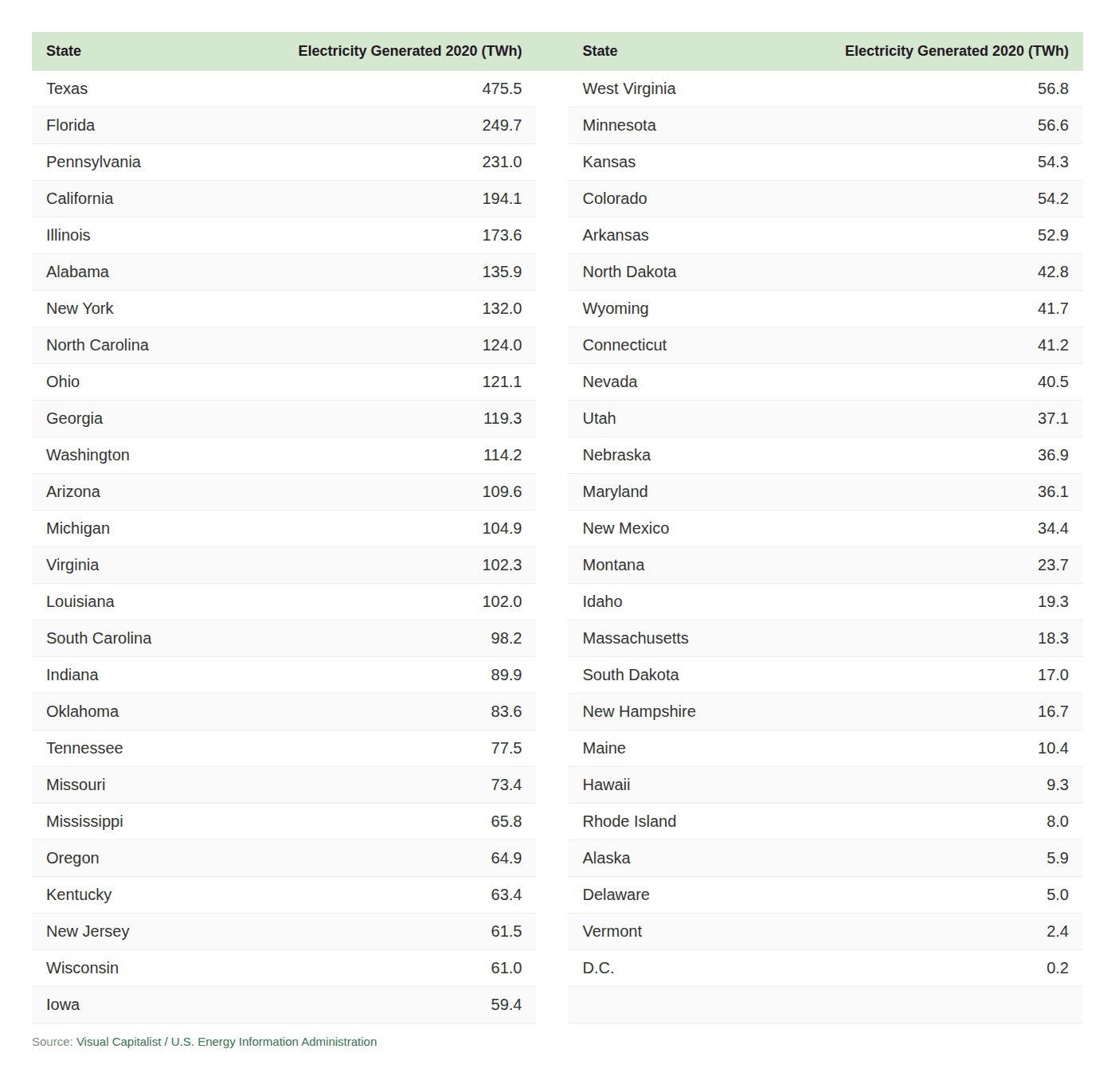
Road to Decarbonization: The United States Electricity Mix
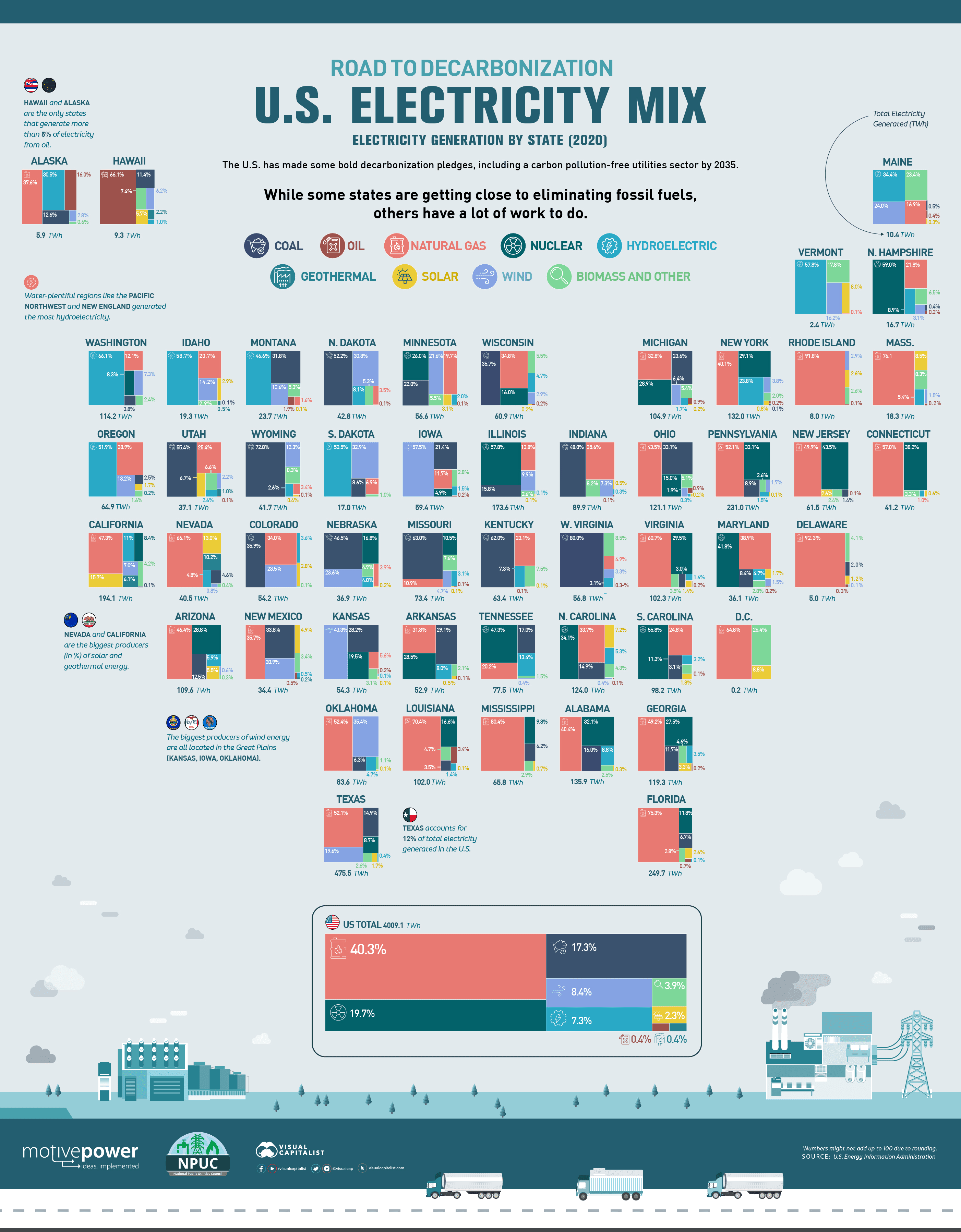
The U.S. Electricity Generation Mix By State
How does the United States generate electricity currently?
Over the course of 2020, the U.S. generated 4,009 TWh of electricity, with the majority coming from fossil fuels. Natural gas (40.3%) was the biggest source of electricity for the country, accounting for more than nuclear (19.7%) and coal (17.3%) combined.
Including nuclear energy, non-fossil fuels made up 41.9% of U.S. electricity generation in 2020. The biggest sources of renewable electricity in the U.S. were wind (8.4%) and hydro (7.3%).
But on a state-by-state breakdown, we can see just how different the electricity mix is across the country (rounded to the nearest percentage).
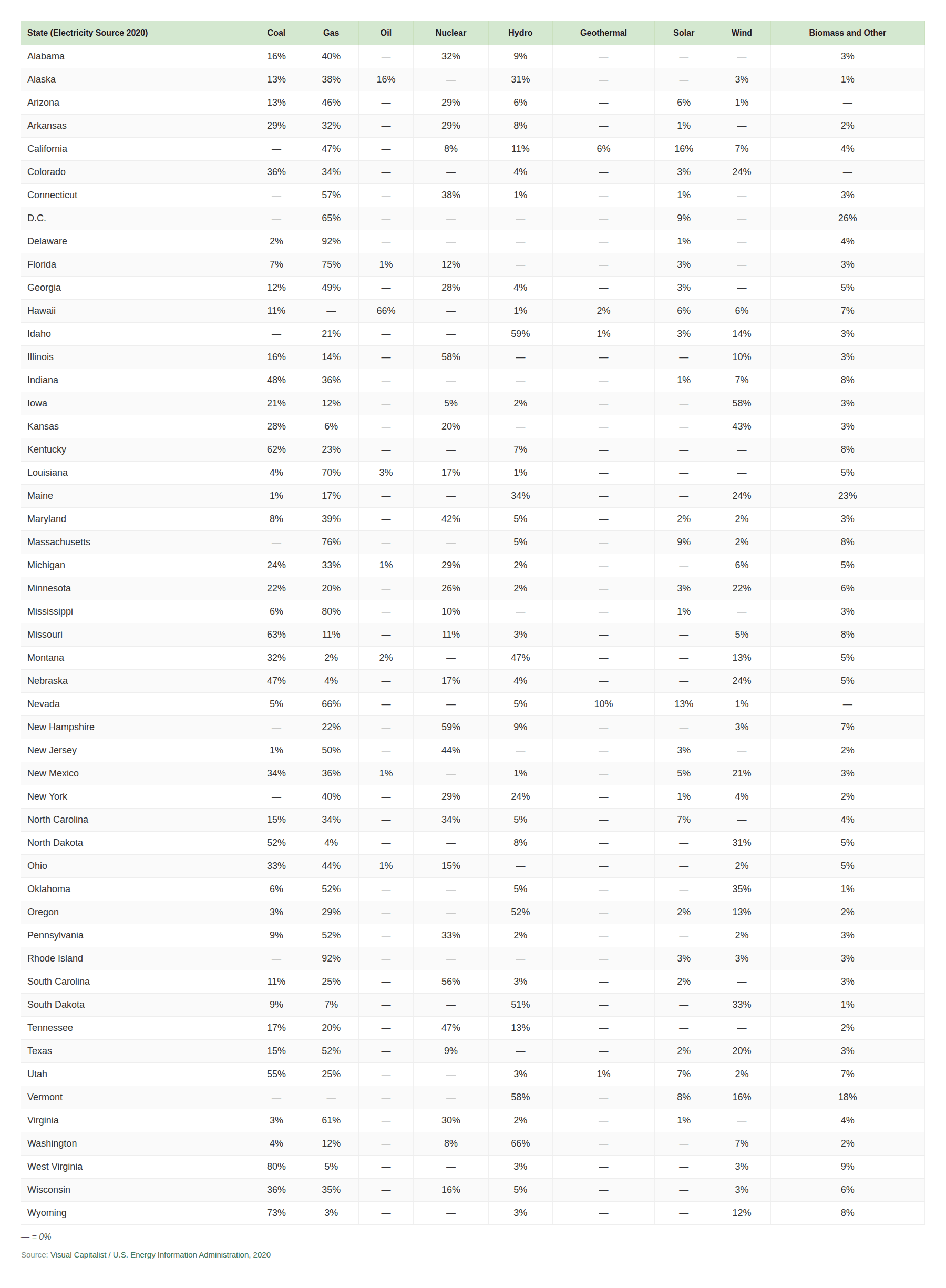
At a glance, regional availability of a fuel source and historical use is clear.
For example, coal is the most-used electricity source in West Virginia, Kentucky, and Wyoming, historical coal rich regions and economies.
On the flip side, the Pacific Northwest and New England generated the most hydroelectricity, and the biggest producers of wind energy were all located in the Great Plains. Even the biggest percentage producers of solar and geothermal energy, California and Nevada, have plenty of access to sunlight and geothermal activity.