Mapped: Carbon Offsets by U.S. State
Key Takeaways
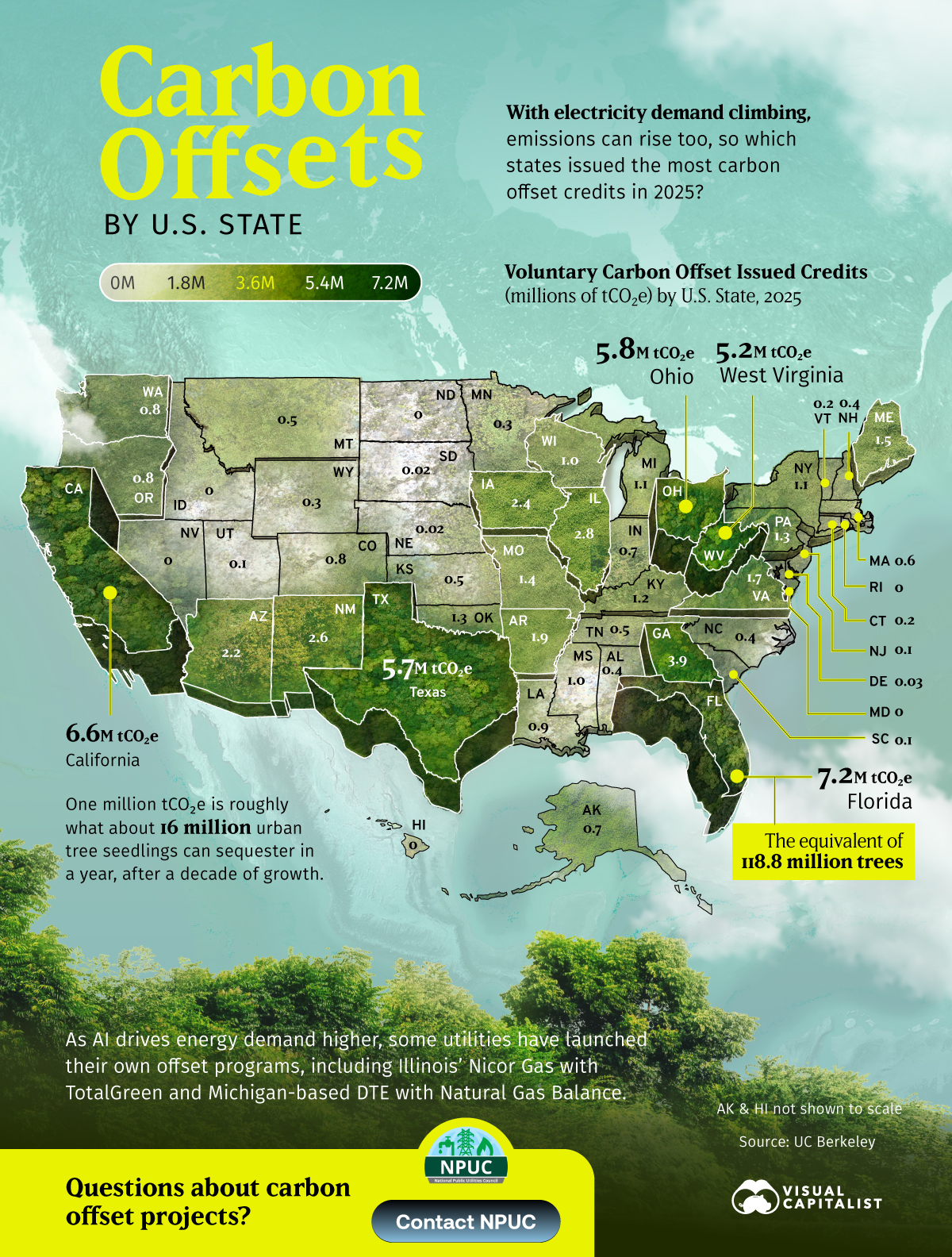
- Florida leads U.S. carbon offsets in 2025, ahead of California and Ohio by credits issued.
- Data center electricity use is rising quickly, and AI is a key driver of that growth.
- Utilities are pairing offsets with reliability planning as AI-driven electricity demand accelerates.
Mapped: Carbon Offsets by U.S. State
AI-driven data centers are pushing U.S. electricity demand higher, and utilities are being asked to add capacity faster than usual.
Consequently, carbon offsets are getting renewed attention as a near-term tool while long-lead infrastructure comes online.
This graphic, in partnership with National Public Utilities Council, maps carbon offsets issued across U.S. states in 2025 using data from UC Berkeley’s Voluntary Registry Offsets Database.
Carbon Offsets Across the U.S. in 2025
Here is a table showing carbon offset credits issued by state in 2025.
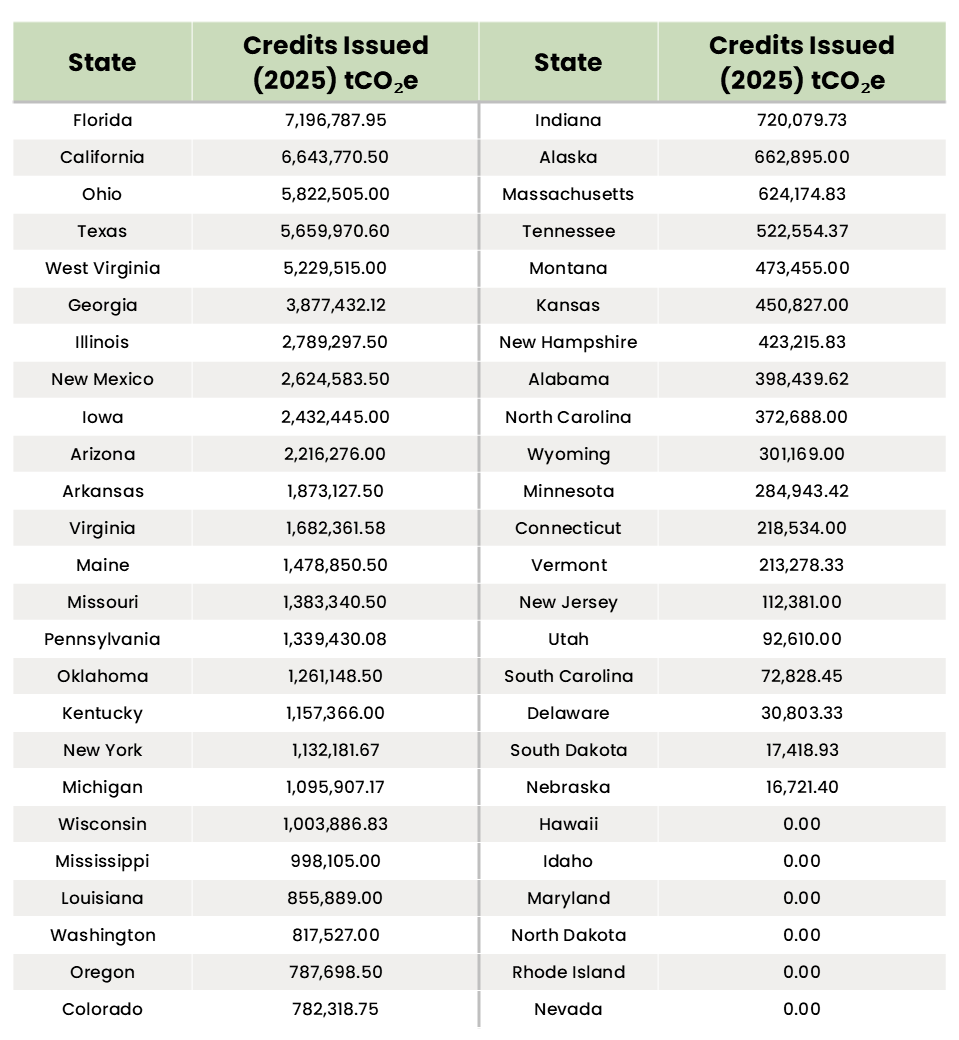
Offset credits are measured in tCO₂e and can represent verified reductions or removals from many project types.
However, this dataset is limited to voluntary registry credits issued and doesn’t include all offset activity nationwide.
The Leaders for 2025
Florida leads with 7.20 million tCO₂e, followed by California (6.64 million) and Ohio (5.82 million).
Texas (5.66 million) and West Virginia (5.23 million) round out the top five, while Hawaii, Idaho, Maryland, North Dakota, Rhode Island, and Nevada report zero.
Even though more projects generally correlate with more offsets, Florida ranked #1 in offsets with 41 projects, compared to 198 for California and 277 for Ohio.
These offset projects can range from forest management to agricultural methane capture to chemical processes such as refrigerant destruction.
For scale, one million tCO₂e is about what 16.5 million urban tree seedlings grown for 10 years can sequester in a year.
Utilities Respond to AI Load Growth
Data center electricity use is rising quickly, and AI is a key driver of that growth.
As AI drives energy demand higher, some utilities have launched customer-facing offset programs, including Illinois’ Nicor Gas with TotalGreen and Michigan-based DTE with CleanVision Natural Gas Balance.
These programs can help customers act now, while utilities continue building the long-term resource mix.
Meanwhile, natural gas is currently positioned as a near-term reliability bridge for data center-driven electricity demand growth.
At the same time, nuclear energy is being discussed as a potential firm, low-carbon solution for meeting future load.
Learn more about how electric utilities and the power sector can lead on the path toward decarbonization here.